Cue-Driven Storytelling
Designing sound so the cue carries the story rather than decorating it. Notes from the board on ambience, transitions, pacing, and the moments where a show either lands or does not.
What cue-driven storytelling means
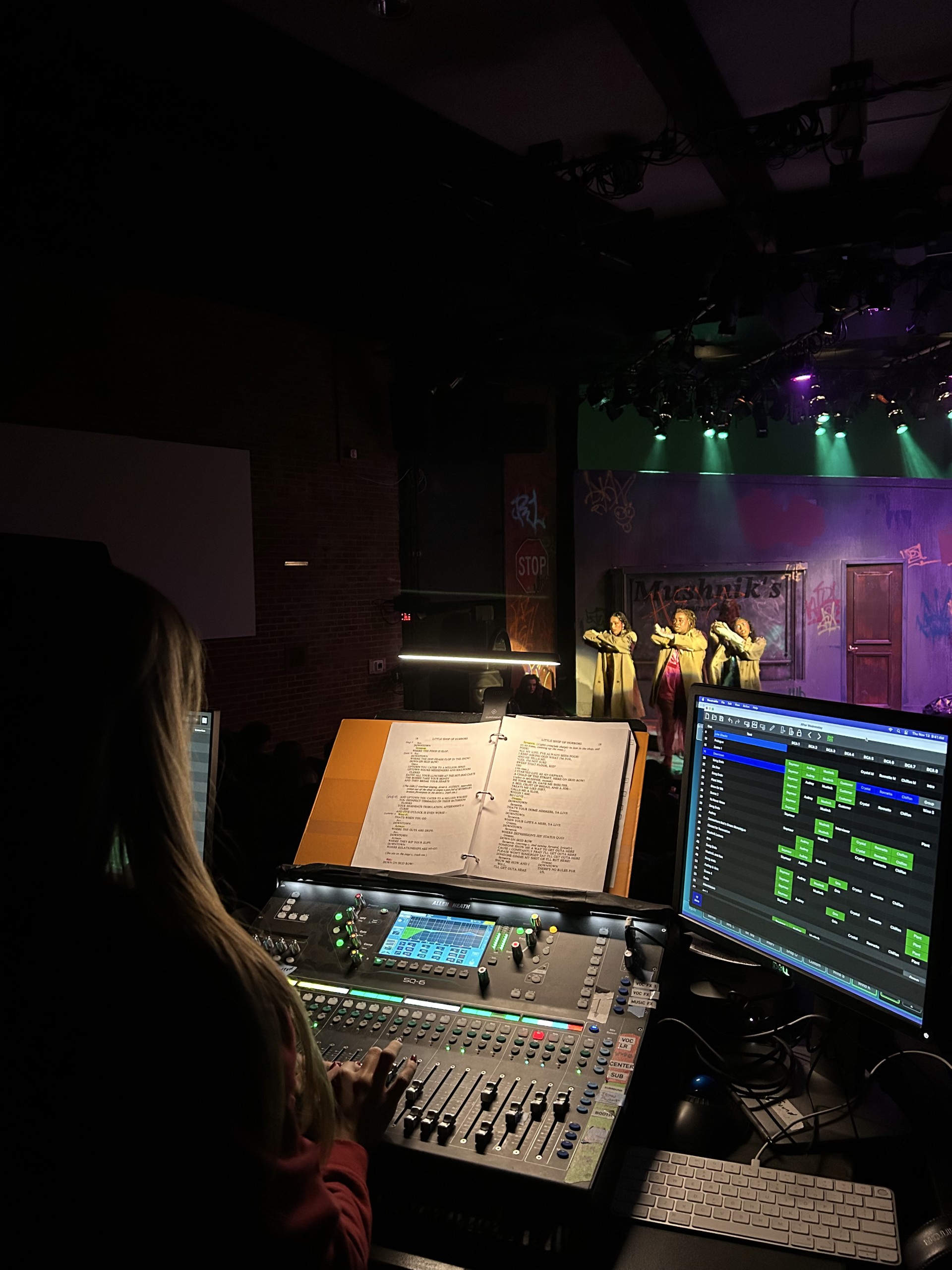
Most sound in a play is decoration: it tells you where you are, and then it gets out of the way. Cue-driven storytelling is the opposite habit. It treats every cue as a beat in the narrative, with a job that could not be done by a line of dialogue or a light, and it asks of each one whether the story would be poorer without it.
In practice that means the design starts from the script rather than from a sound library. It means a transition is not a gap to be covered but a passage of time an audience has to feel. It means ambience is built from what a character would actually be hearing, and pantomime work is timed to a performer's hands rather than laid underneath them.
It is a working method rather than a style, and it is what the pages below are about.
Notes
- What a cue is actually for Why most sound in a play is decoration, and what changes when it is not.